

A closer look at one night
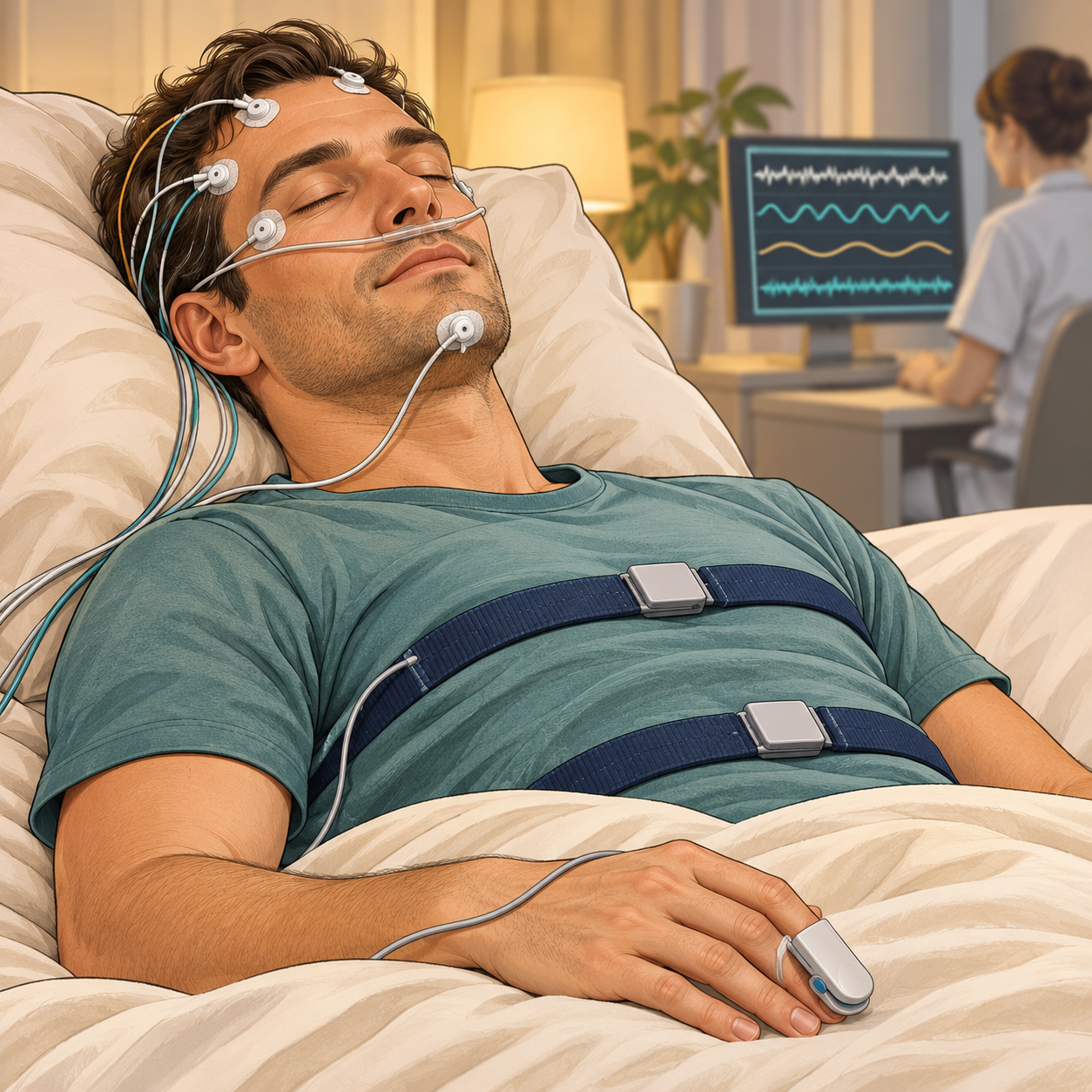
The examination takes place in a sleep laboratory. Small sensors are attached before bedtime. While you sleep, the signals are recorded and monitored.
What is measured?
Brain activity, eye movements and muscle activity help identify sleep stages and brief arousals. Breathing, blood oxygen saturation, heart activity, body position and leg movements are also recorded.
How does it help you?
The examination helps assess sleep-related breathing problems and other causes of disturbed sleep. Unlike a simple respiratory polygraphy, it also measures sleep structure. Your clinician decides which examination suits your situation.
What happens afterwards?
The team analyses the recordings and discusses the results and next steps with you. Polysomnography examines your sleep; it is not itself a treatment.