

Seeing in three dimensions rather than guessing
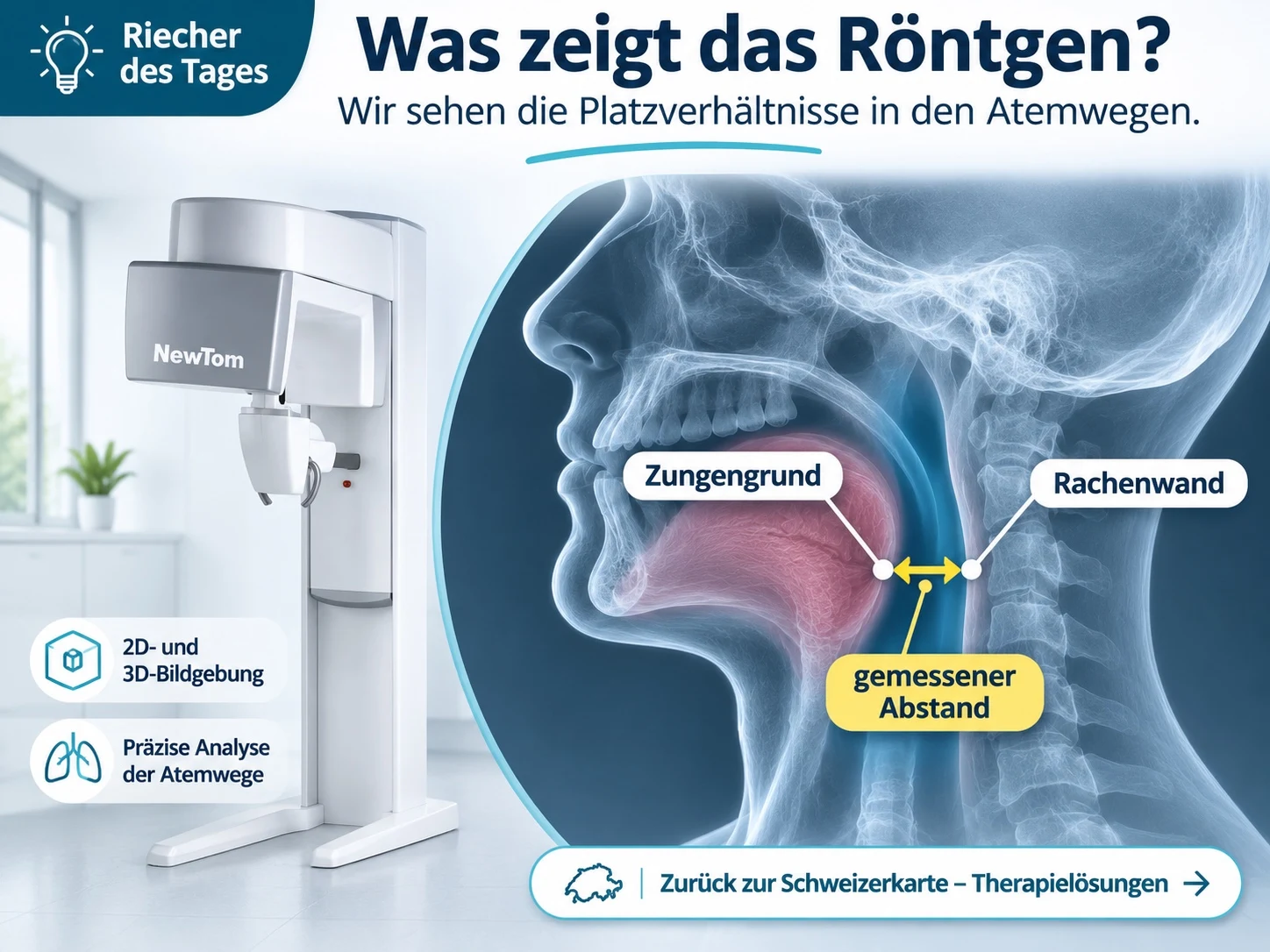
Imagine your throat as a space through which air flows. Cone beam computed tomography (CBCT, also called DVT) uses X-rays to create a three-dimensional image of the area being examined. Professionals can view it from different directions rather than seeing only a superimposed two-dimensional image.
NewTom is a device brand. Meditrend is listed as a Swiss distribution partner in the official NewTom directory. The examination itself takes place at an appropriately equipped practice or centre.
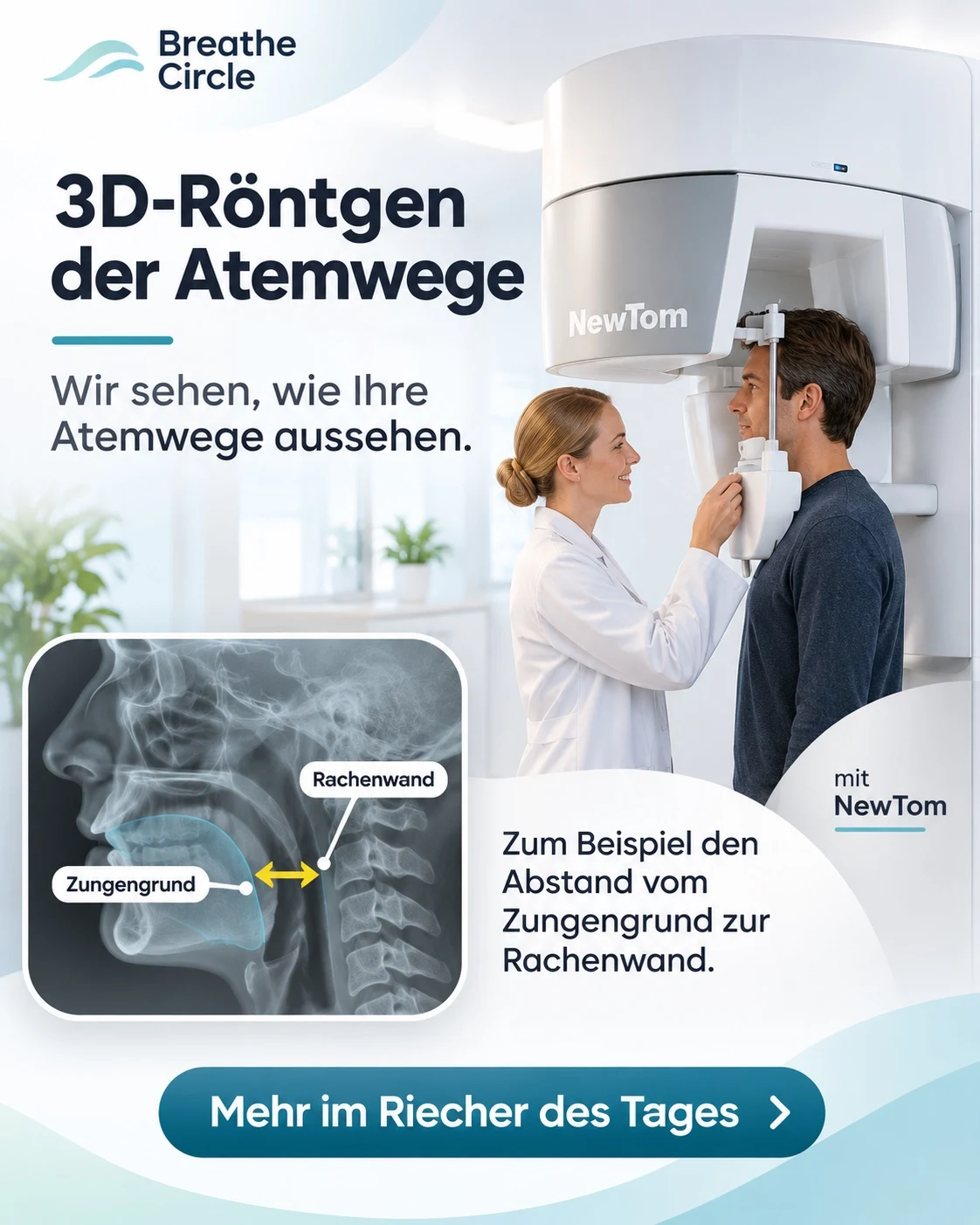
For example: the space behind the tongue base
Depending on the area scanned and the image quality, distances, cross-sections and the volume of the visible air space can be assessed. One example is the space between the tongue base and the back wall of the throat. This helps make the anatomical situation easier to discuss.
However, a single distance does not automatically explain snoring or sleep apnoea. Posture, breathing and the position of the tongue and lower jaw influence the image. There is no single numerical value here that determines the right treatment on its own.
What else can become visible?
Depending on the selected field of view, teeth, jawbones and bony structures of the nose and paranasal sinuses may also be assessed. Such information can help with dental, maxillofacial or ENT questions, for example.
CBCT has a limited ability to distinguish soft tissues. It cannot identify every change; some questions require a different examination.
The benefit for you: understanding findings better
The professional can use the image to show you which structures might be relevant to your symptoms. This makes it easier to discuss further assessments and suitable treatment options together. For a specific clinical question, a three-dimensional view can support planning.
An X-ray is an examination, not a treatment. It belongs in the care pathway only when the treating professional expects a specific benefit.
What a scan cannot answer
An X-ray is a snapshot. It does not reliably show how your airways behave during sleep. On its own, it can neither reliably diagnose nor rule out sleep apnoea. Depending on the medical assessment, a respiratory sleep study or an examination in a sleep laboratory may be needed.
Not everyone who snores needs an X-ray. CBCT uses ionising radiation. The responsible professional therefore assesses the benefits, radiation exposure and possible alternatives, and selects the necessary scan area.
Where can you have an examination?
The link below takes you to the Swiss map with the “3D X-ray / NewTom” filter. Appropriately confirmed services are assigned there. At present, no NewTom examination location has been confirmed in our directory.
Before making an appointment, check directly with the practice whether it offers the required examination and specialist interpretation, whether you need a referral and what costs are involved. Meditrend is the equipment partner; we have not confirmed its company address as an examination location.