

Sleep position: can sleeping on your side help?
Can changing your sleep position help? For some people, yes. These six images show what matters.
Sleeping on your side may help. Whether it is sufficient as a treatment for sleep apnoea requires medical assessment.
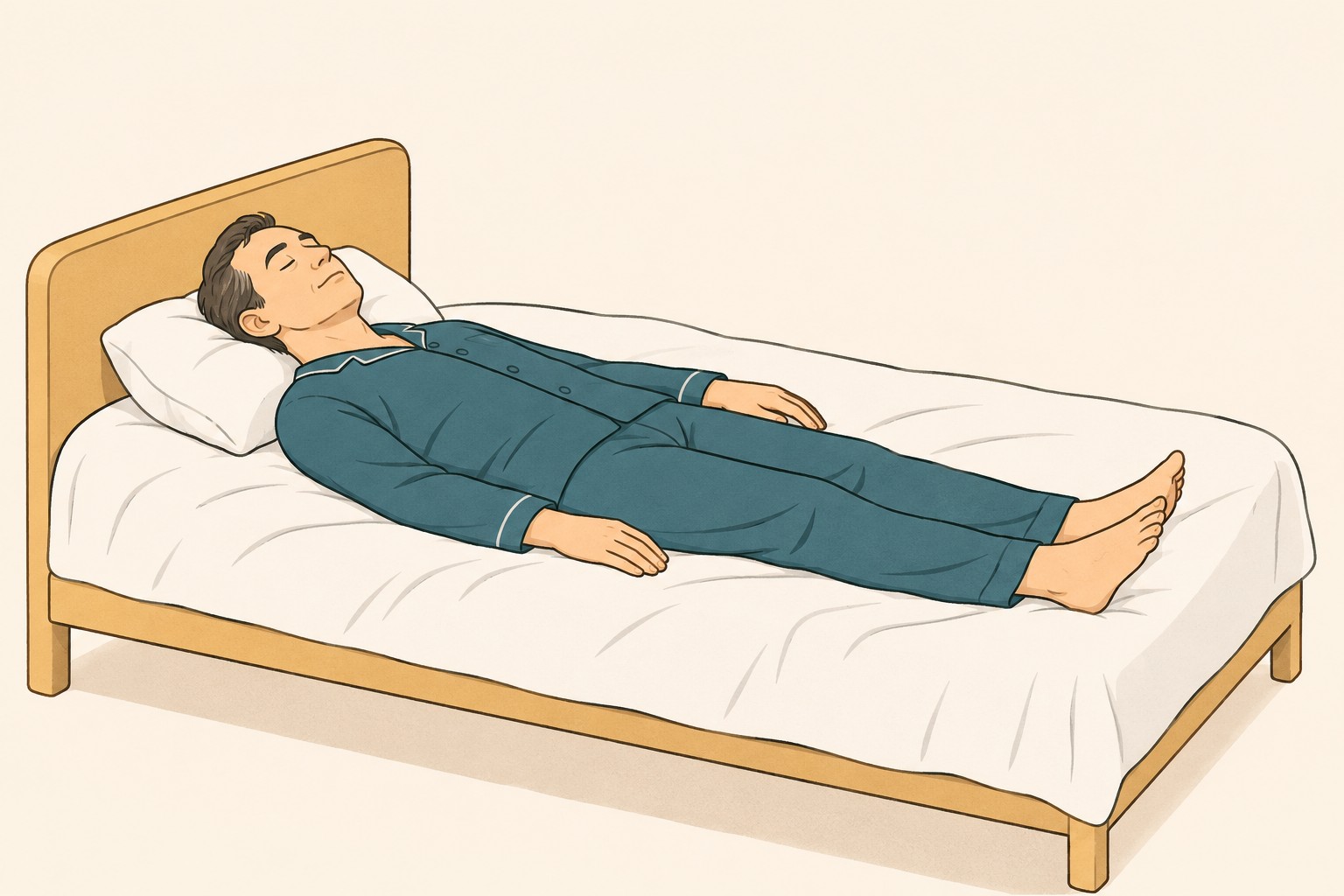
It may get worse on your back.
For some people, snoring and breathing pauses mainly occur when sleeping on their back. For others, sleep position plays a smaller role.
Sources: [1]
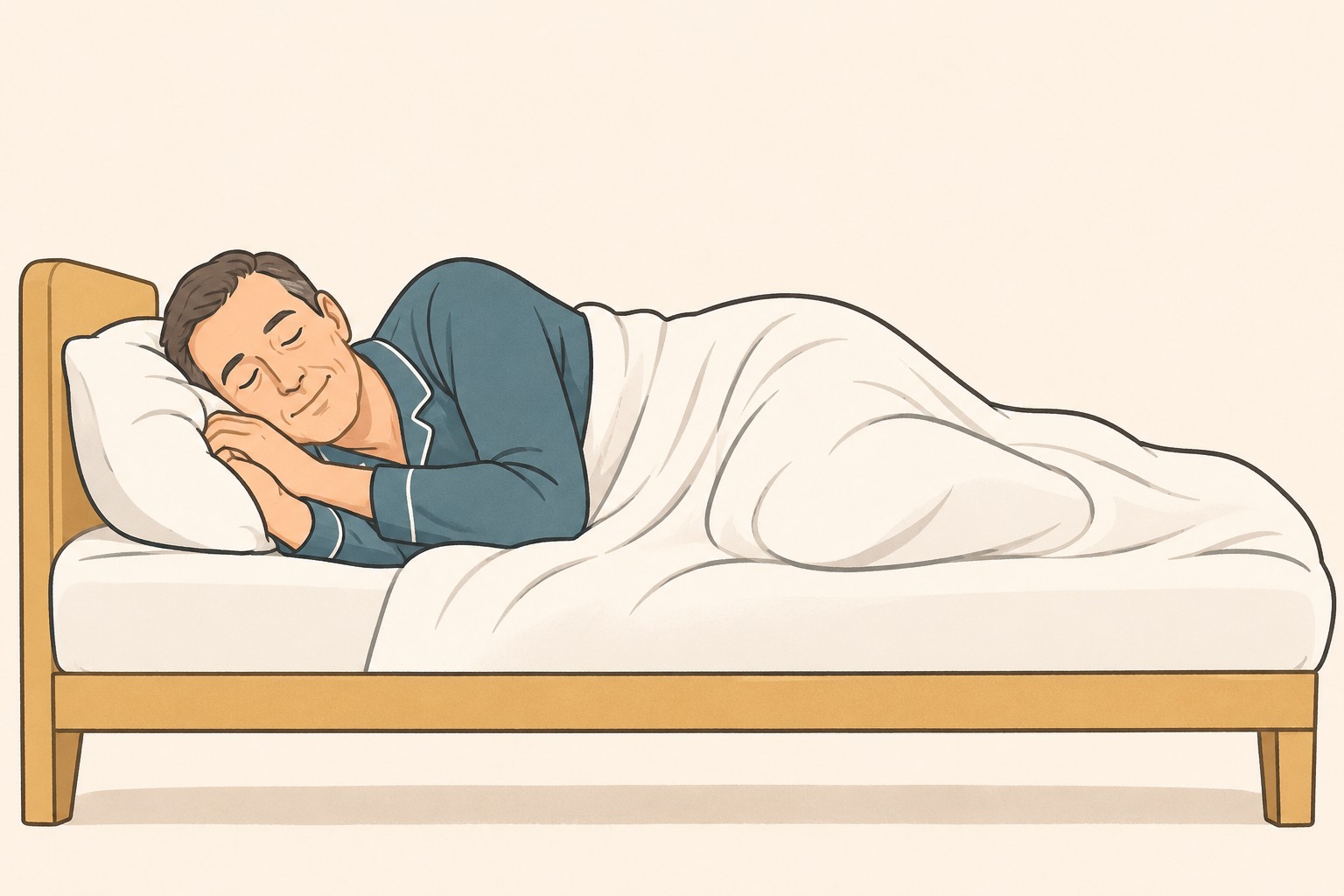
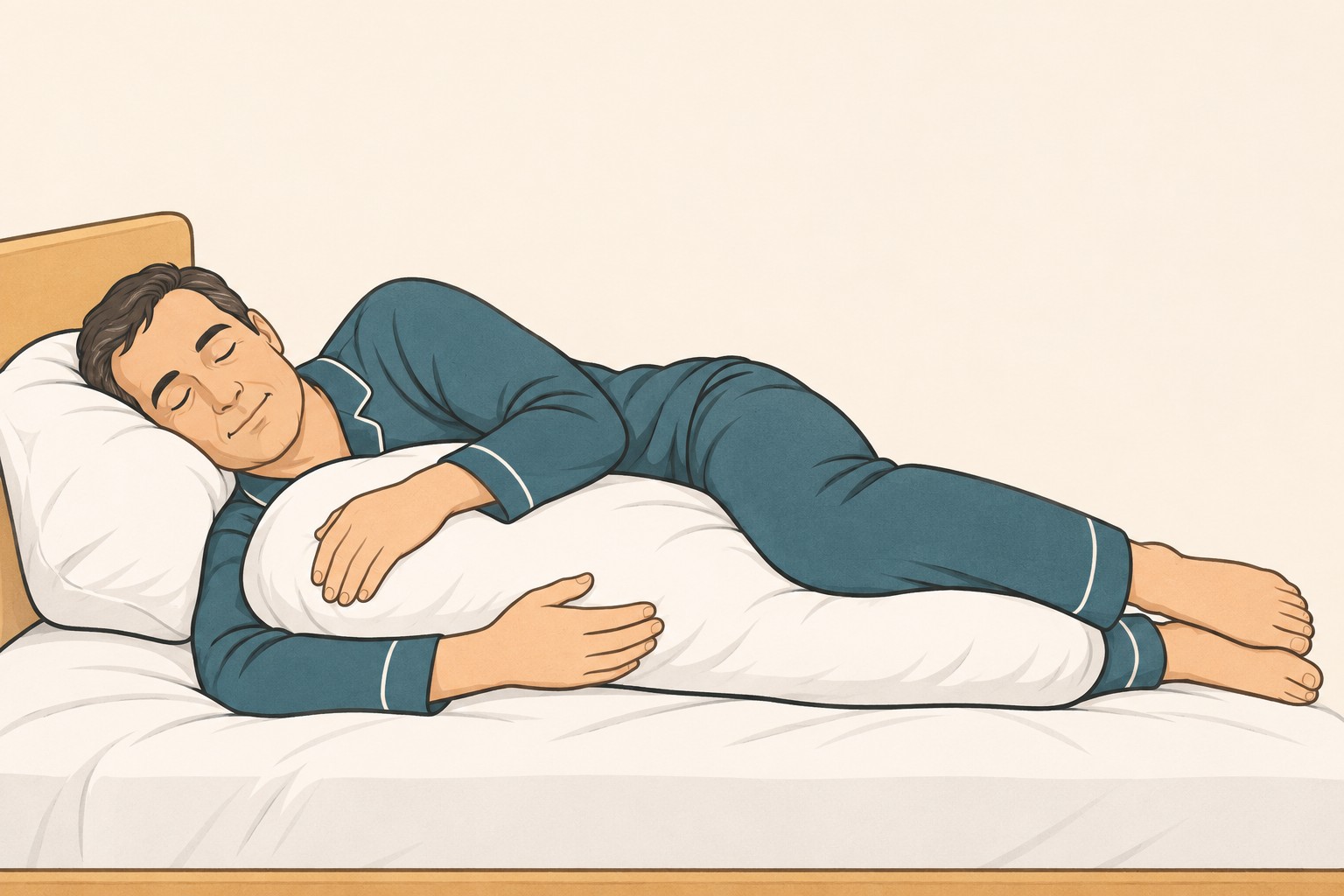
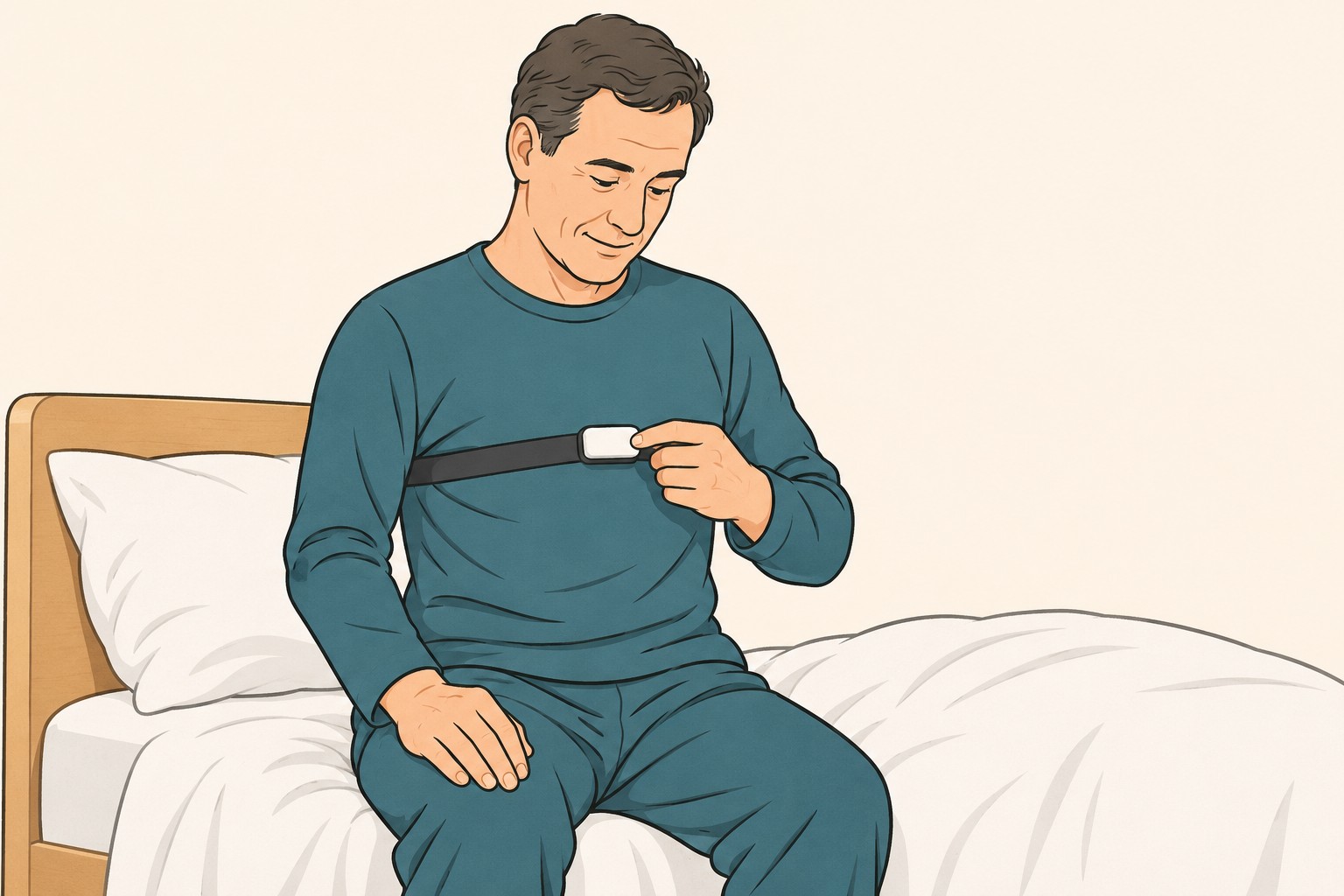
A recording shows whether position matters.
An overnight examination that records body position shows whether and how strongly breathing pauses depend on sleep position. Your doctor decides which examination is appropriate.
Sources: [3]
AI-generated symbolic images. People and aids are shown in simplified form; these are not product images or instructions for fitting a device.
Your next step in the Snoring Jungle
Bring your observations to a snoring consultation or medical appointment. Discuss whether an overnight recording is appropriate and which treatment fits your findings.
Sources for the facts
- Lunge Zürich: sleep apnoea – avoiding back sleeping and changing sleep position
- NHS: Sleep apnoea – symptoms, assessment and supportive measures
- European Respiratory Society (2021): guideline on non-CPAP therapies, positional therapy section
The ERS recommendation on positional therapy is conditional; the certainty of the underlying evidence is rated very low. It does not imply a general recommendation for everyone with sleep apnoea.
Sources checked on 18 November 2026. The information relates to adults.